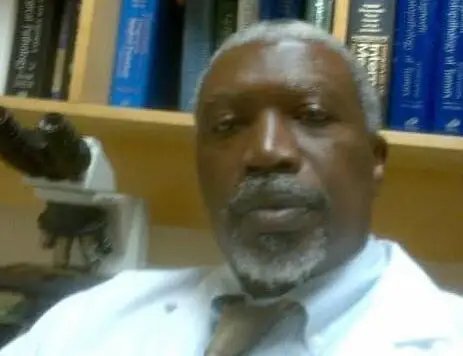
According to Antigua News Room, Dr. Lester Simon has penned a sharp commentary examining Antigua and Barbuda's deep dependency on Cuban healthcare workers — and what their departure reveals about decades of inadequate planning in the nation's health sector.
Dr. Simon opens with a pointed observation: helping others too much can breed dependency, and that principle, he argues, cuts both ways. Antigua and Barbuda, he contends, became so reliant on the Cuban Health Brigade that the country failed to build the self-sustaining healthcare infrastructure it urgently needs.
"In this context, the crucifixion of the Cuban people puts our health service on the cross for all to see our lack of critical thinking and planning and our overt over-dependency on the Cuban healthcare workers," Dr. Simon writes.
He acknowledges the immense contribution of Cuban medical professionals, noting that the number of Antiguans trained in healthcare in Cuba cannot be counted on fingers and toes. Without the Brigade, he states, the country's healthcare system would have been in grave danger. And yet, he points out, the nation still struggles to meet growing healthcare demands.
Dr. Simon reserves particular criticism for the physical constraints of the country's sole government hospital, questioning the decision to build it on what he describes as a "pin-head mount of land" with no room for expansion — despite vast tracts of government and privately-owned land in the surrounding area along Comache's Avenue and Queen Elizabeth Highway going unused.
He traces the gradual decline of peripheral clinics across the island, linking it to increased mobility among the population and to local doctors — many trained in Cuba — confronting the economic realities of practising medicine in a small island state. "Good medicine and hustling do not go together," he writes pointedly.
The result, Dr. Simon argues, is an ironic and unsustainable situation: the hospital is simultaneously performing its core function and absorbing the workload that district clinics should be handling, while acres of nearby private land remain unacquired and undeveloped for healthcare use.
He calls for a fundamental rethinking of the national healthcare plan, arguing that Antigua should not have simply employed Cuban workers but should have studied Cuba's healthcare model and adapted it to local conditions — including the movement patterns of a now highly mobile population. He also cautions against treating healthcare workers from Ghana as a long-term solution, describing their recruitment as "a temporary measure in this new Atlantic Slave Trade."
Dr. Simon also raises an unresolved concern about a medical ship that visited the island years ago and performed surgical operations on Antiguan nationals. He states that neither the surgical pathology reports nor the specimens from those procedures are recorded at the hospital or anywhere on the island — a gap he says he raised directly with a senior official connected to the vessel after it had departed.
As reported by Antigua News Room, Dr. Simon closes with a call to action. As the country bids farewell to its Cuban colleagues, he urges Antigua and Barbuda to commit to better planning, to seek local solutions grounded in mathematics and science, and to ensure the nation is never again caught without the capacity to stand on its own — medically, or otherwise.