By Ambassador Dr. Clarence E. Pilgrim
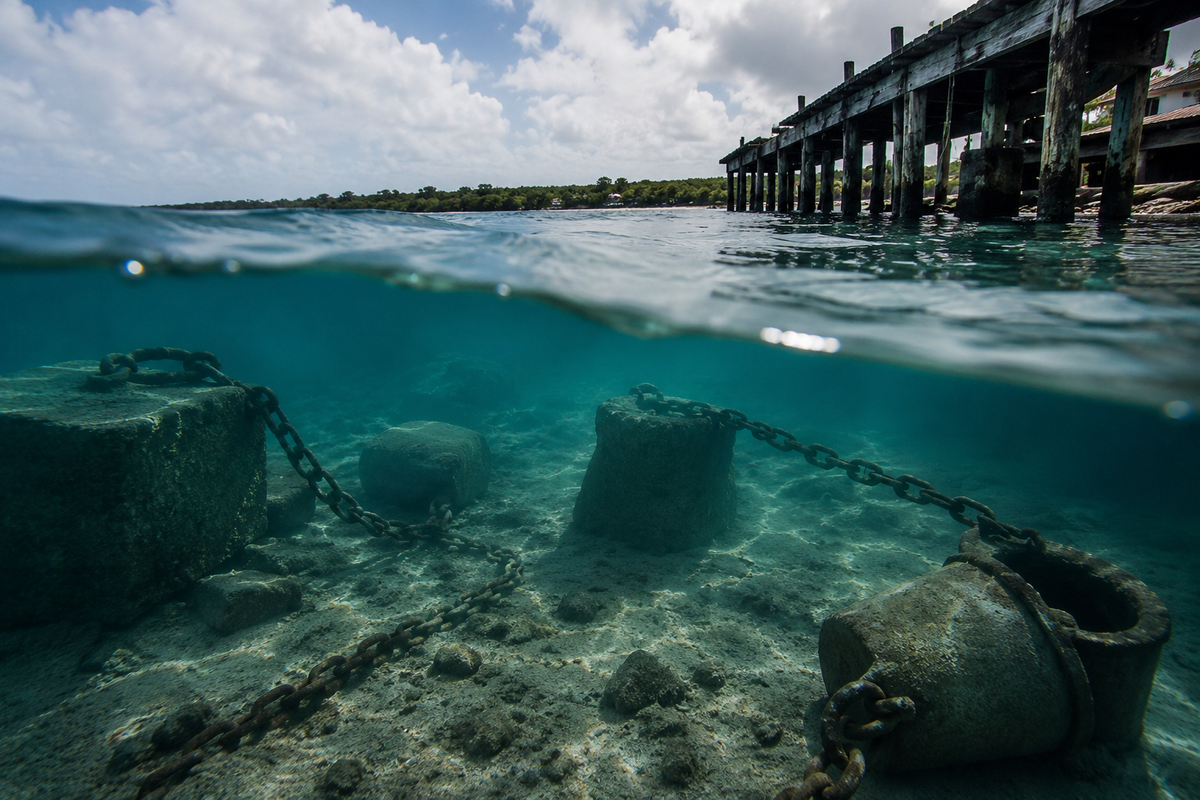
The Caribbean is not merely a collection of states defined by proximity. It is a region bound by a shared geographical, social, and economic relationship with the Caribbean Sea — a body of water that serves not as a divider, but as a unifying space facilitating trade, cultural exchange, and sustained interaction among nations. According to Antigua.news, Ambassador Dr. Clarence E. Pilgrim argues that this shared environment has shaped patterns of cooperation, interdependence, and mutual reliance that define the Caribbean experience.
Within this context, the Caribbean does not approach global peace as an abstract aspiration. It approaches it as a lived necessity. For small states, conflict is not an abstract geopolitical contest — it is a direct threat to livelihoods, stability, and national survival. The Caribbean has therefore historically pursued peace not as an ideal, but as a practical imperative.
Through decades of coordinated diplomacy, regional integration, and collective restraint, institutions including the Caribbean Community (CARICOM), established by the Treaty of Chaguaramas in 1973 and now comprising 15 Member States and 6 Associate Members; the Organisation of Eastern Caribbean States (OECS), formed under the Treaty of Basseterre on 18 June 1981 and comprising 7 Member States and 5 Associate Members; and the Association of Caribbean States (ACS), established in 1994 and bringing together 25 Member States and 10 Associate Members, have consistently articulated a unified principle: that peace must be structured, protected, and sustained.
This is not rhetorical positioning — it is policy. It aligns with global norms reflected in the United Nations Charter and the Universal Declaration of Human Rights, which affirm the dignity of all persons and the obligation to resolve disputes peacefully. It is also consistent with the Sustainable Development Goals, which recognise that peace, stability, and inclusive institutions are foundational to sustainable human progress.
CARICOM Heads of Government have repeatedly reaffirmed the Caribbean as a "Zone of Peace," emphasising dialogue, cooperation, and adherence to international law as the primary mechanisms for resolving disputes. This commitment was most recently reinforced at the Fiftieth Regular Meeting of the Conference of Heads of Government of CARICOM, held in Basseterre, St. Kitts and Nevis, from 24 to 27 February 2026. In contrast to larger geopolitical actors that often frame stability in terms of power balance, the Caribbean has advanced a different proposition: that stability emerges not from dominance, but from disciplined cooperation.
Recent outcomes from that meeting, as reflected in official communiqués, demonstrate that this commitment is actively evolving. Heads of Government reaffirmed their coordinated engagement on Haiti through diplomatic and mediation support aligned with international stabilisation efforts. They also strengthened coordination among regional security and law enforcement mechanisms to address transnational threats, and reaffirmed common regional positions in international fora. These actions collectively underscore a deliberate approach to preserving regional stability.
This pattern of coordinated action extends beyond CARICOM. Within the OECS, whose Heads of Government met in Saint Lucia on 13 January 2026, official outcomes reaffirmed commitments to peace, stability, and good neighbourly relations; strengthened coordination in responding to external geopolitical pressures; and advanced cooperation in border management and regional security — all contributing directly to maintaining order within a highly interconnected sub-region.
At the wider basin level, the Association of Caribbean States has reinforced this trajectory. The Tenth Summit of Heads of State and Government of the ACS, convened in Colombia from 28 to 30 May 2025 and culminating in the Declaration of Montería, reaffirmed the Caribbean Sea as a shared space for cooperation, peace, and sustainable development. The summit also advanced coordination in disaster risk reduction and climate resilience — critical factors in preventing social and economic instability — and reaffirmed dialogue and multilateral engagement as the primary instruments for resolving differences.
Taken together, these outcomes are not isolated administrative decisions. They reflect a consistent regional logic — one that is egalitarian in substance and grounded in practical, coordinated action. They illustrate that peace in the Caribbean is not incidental, but deliberately structured and reinforced.
A careful reading of regional practice reveals a functioning framework, not merely an aspirational construct. The commitment to peace is expressed through a consistent preference for diplomacy over escalation and cooperation over confrontation. This reflects a deeper understanding that peace must be institutionalised rather than assumed, and that stability is sustained through deliberate and continuous engagement.
Such a system is not without its internal dynamics. From time to time, differences in perspective and approach will emerge among Caribbean nations. This is neither abnormal nor destabilising — it is an inevitable feature of sovereign states operating within a shared regional framework. What distinguishes the Caribbean model is not the absence of disagreement, but the manner in which disagreement is managed: through measured, constructive discussion rather than outright dismissal.
It would be unrealistic, however, to suggest that this model operates without strain. There have been notable moments where differences have tested cohesion and required deliberate, patient diplomacy to restore alignment. There have also been instances where peace itself has been more fundamentally challenged. In such circumstances, while the Caribbean model prioritises dialogue and restraint, there are limited situations in which the use of force may be necessary to restore order and secure peace — though only within a clearly defined, lawful, and proportionate context.
The objective is never the pursuit of force, but the preservation of peace. Where force is required, it must be anchored in legitimacy, guided by international law, and constrained by clearly established parameters. Even in such instances, the overarching commitment remains unchanged: the restoration and maintenance of peace through structured cooperation.
This balance between sovereignty and collective responsibility has produced measurable outcomes. Caribbean states, on average, fall within the medium to high Human Development Index category, reflecting relatively strong performance in education, health, and social development compared to many developing regions — though still below the highest global benchmarks. These outcomes are closely linked to sustained peace, effective governance, and regional cooperation.
What emerges is a model that is both principled and practical — grounded in cooperation, reinforced by shared experience, and aligned with international norms. It is also increasingly relevant in a global environment where traditional approaches to conflict management continue to produce instability. It is at this juncture that the Zone of Peace Doctrine becomes operational, not merely as a regional approach, but as a broader philosophical and policy framework with implications beyond the Caribbean basin.